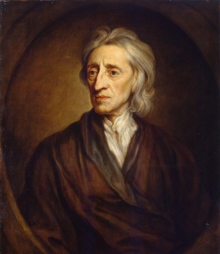
Many of the Enlightenment Era philosophes works influenced the radical political changes that would occur during the transition from the mid-18th Century to early 19th Century. None of which feature more predominately than the American Revolution and its establishment of a neo-republic as rebuff to the monarchical dominance of Europe. Throughout the literary discourse and government building documents, the ideology of social contract with disposition toward rights as understood through the state of nature, evidenced by Hobbes, Locke – as well as others – developed a system of institutions defined to protect the security of “life, liberty, and property.” An understanding on the views of this state of nature, its influences on latter social, economic and political philosophies may be examined by reaching into the works of Hobbes and Locke, then applying their notions to further dialogue.

The startling contrast between the sentiments of John Locke and Thomas Hobbes regards their opinions of humanity under natural laws. Within the state of nature, they each understood man a free being at birth, however, Hobbes explains his idea of social contract in the Leviathan, as a means in which mankind tempers free will and the propensity of evil conflictions within society. Locke has a generally more forgiving notion that mankind enters social contracts as a means to facilitate proper distribution of security as preservation – rights and property, so that free will may not be corrupted against another human. Both contend that liberty of man must be reined in by covenant, as “foresight…of a more contented life…” is of necessity and that giving up personal governance for the common good benefits the whole.

This is where the parallelism seems to terminate, as Hobbes and Locke conflict on the means of governance through the social contract. Hobbes, with the ever more cynical view of man, insisted that the appropriate system would be placed within the power of a singular sovereign given the right to govern by those whom enter the contract, and therefore were in return due certain rights but could not abolish or makes changes to the contract once in place. The sovereign maintained authority to do as would be “necessary for the preserving of each and security and prevention of discord.” Locke’s understanding of natural law determining man’s rights gave him to advocate that “equality in which all power and jurisdiction is reciprocal and no one has more than another” could be determined through a system of government that could be changed by those that consent to be governed. Government, legitimated by the consent of those seeking security of life, liberty and property, was a manifestation of which to serve those ends and if neglected may be altered or abolished.
Adam Smith shared in Lockean idealism in regards to the overall benevolence of man towards man in relation to the preservation of liberty and property. Though more attuned to economic theory, Smith made correlations between social philosophy and impacts on financial matters given that the natural state of man undergoes a progression through four stages that ultimately require a complex structure to provide security (Kramnick 378-380) allowing those within society to determine value of trade and rights in a sense that they “naturally dispose…employments which…are more advantageous to the society” (Kramnick 510).

In Wealth of Nations (1776), the very Anti-Hobbes sentiments towards ambitious singular reign allude to pride as detriment to the welfare of society (Kramnick 510 & 514) – one of Hobbes factors of reputation. Thomas Paine would be quick to point out that this singular sovereign would be easy to identify as the point of which suffering originates, as “absolute governments…are simple” and man would be to suffer oppression under “obligation of Law” for the “common interest” (Kramnick 443-445). To Paine, whole is greater than the sum of its parts within a Republic, but the rights of man include the allowance to revolt, abolish and restructure government (Kramnick 469).
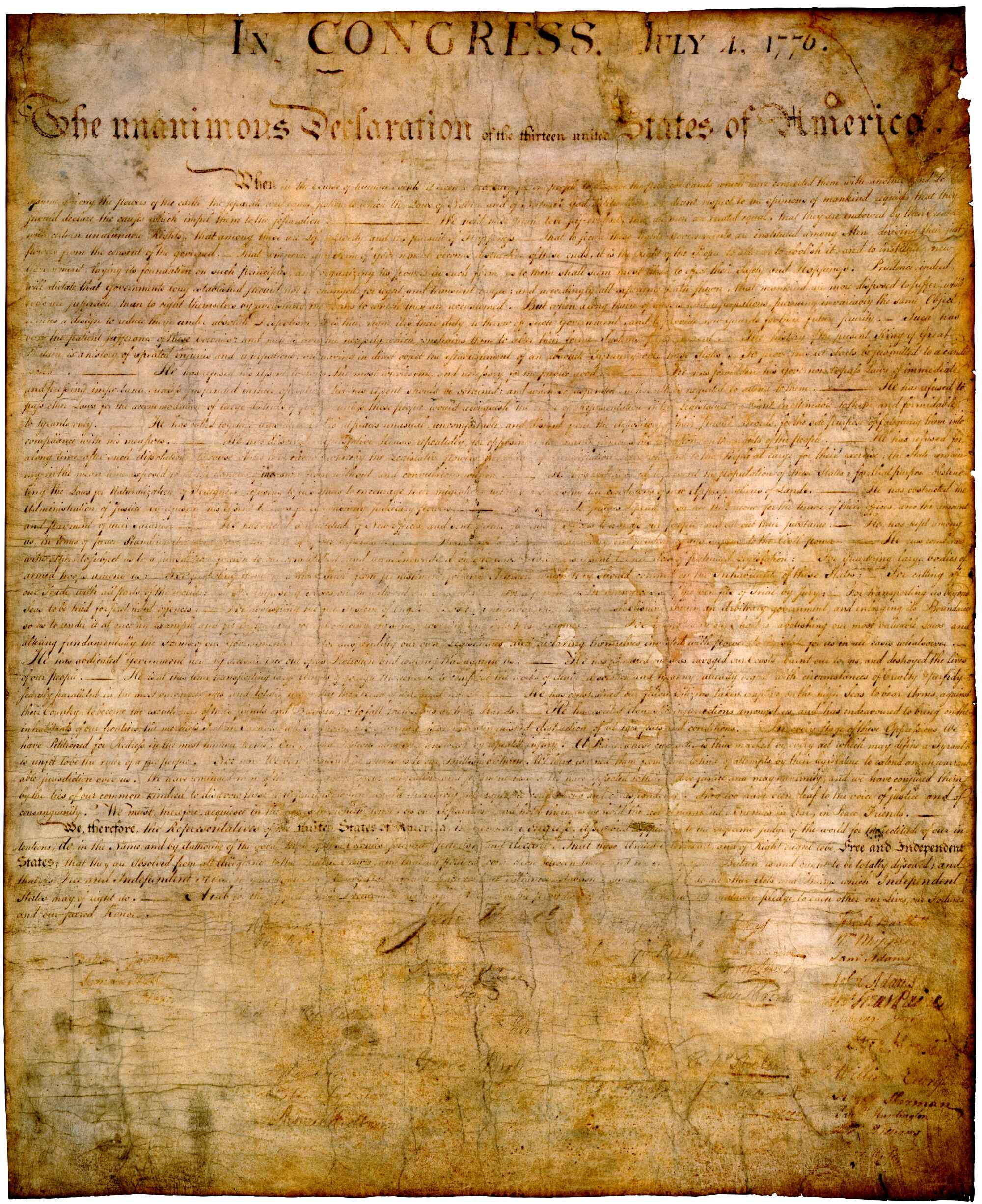
Paine would have been influenced in those statements by the American and French Revolutions in practice, as well as the writings of John Locke, and in opposition to Hobbesian sovereign rule. Those radical political transformations were precipitated in the American Colonies through several instances of enlightened thought applied to civic unrest. The 1754 Albany Plan of Union, submitted by Benjamin Franklin is an early example of a more collective and representative government in the Colonies (Bruun, and Crosby 108-109), a harbinger of the 1774 Declaration and Resolves produced by an American Congress to affirm colonial rights as English citizens. John and Sam Adams, Patrick Henry, Roger Sherman, John Jay and George Washington were among those who presented the words that, “immutable laws of nature…have the following rights…life, liberty and property, and they have never ceded to any sovereign power whatever, a right to dispose of either without their consent” (Bruun, and Crosby 132). At the time the question was more over their lack of representation in Parliament, in retrospect Locke speaks through them and as precursor to the Declaration of Independence that would follow; in which they submit “candid” the intent to “dissolve the political bonds” (Bernstein 81).
In testament to Hobbesian thought might be more practicable the influence on the establishment of a more permanent system of government in the fledgling United States. In efforts to ensure that government would not be of a singular rule - and not fall prey to the nature of man to destroy others for gain of security, pride and reputation – a system of checks and balances between three branches of government would be created. Many of the founders shared that cynical thought of humanity en mass. Lockean republicanism could lay at the mercy of ill willed men or factions; this struggle most notably recognizable in the Federalist and Anti-Federalist sentiments as the earliest call to reconstruction of the government from the Articles of Confederation to a Constitution. Alexander Hamilton notes this in the Federalist #1, “…the vigour of government is essential to the security of liberty; that, in the contemplation of a sound and well informed judgment, their interest can never be separated; and that a dangerous ambition more often lurks…” (Hamilton 5). In a manner to counter-act the “propensity toward evil” in mankind, as James Madison viewed it, the Constitution devised a government intended to restrict corruptive abuses by limiting powers and balancing them among the three branches (Hamilton xxi-xxiii). The flexibility of the document was in the details however, as Article V allows for Amendments (Berstein 56), to perform – as Hamilton states – the
“…purpose for which government was instituted…[as] means by which the public happiness may be promoted…[by] the deliberate sense…that the people commonly intend the PUBLIC GOOD”
(Hamilton 436).
It proves that Locke’s theories had heavier hand in the formation of American Republicanism. Jefferson cites “laws of Nature” within the Declaration of Independence, that “Respect to the Opinions of Mankind requires…Consent of the Governed” – human reason, that is, that power is derived in government to protect the rights of man. Institutions and systems of government throughout the world now view that ideology as essential to peace among mankind, centuries of practice therefore depleting the radical element within it. Social contracts formulating government, be them local, state, national or international organizations, understand that giving up aspects of personal natural liberties is a means to ensure security of the whole.